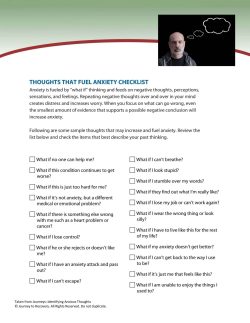
Managing social anxiety involves recognizing the triggers and developing effective coping strategies. Reflecting on past interactions can help identify patterns of fear or avoidance. Some key signs of social anxiety include a fear of judgment, avoiding social situations, and physical symptoms like trembling or sweating. Coping strategies, such as reducing caffeine intake, practicing relaxation techniques, and breaking down tasks into manageable steps, can significantly reduce social anxiety. By connecting with supportive people and focusing on positive outcomes, you can practice these strategies to manage social anxiety in everyday life.
Written by clinical psychologist Dr. Hal Baumchen, PsyD, LP, LADC, this printable PDF worksheet gives clinicians a practical, session-ready tool. The conversational, encouraging tone makes clinical concepts accessible to clients at any stage of recovery, while structured prompts keep the work focused and productive.
How clinicians use it: as an in-session exercise to open and structure discussion, as between-session homework to reinforce skills, as a progress tool to track growth over time, and as part of a treatment unit paired with the companion lesson and PowerPoint on this topic. Formatted for easy printing and immediate use in individual or group settings.